
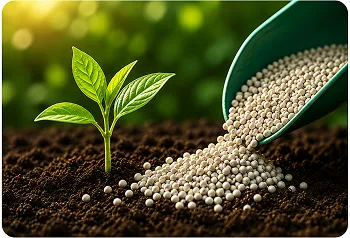
Getting the Most from Every Fertilizer Application
Applying fertilizer is only part of the equation. Knowing when, where, and how to apply it determines how effectively crops can use the nutrients provided.
Before You Apply
Start with a few basic questions:
- What crop are you growing?
- What growth stage is it in?
- Has the soil been tested recently?
- Which nutrients are actually needed?
These answers help eliminate unnecessary applications.
Follow the Growth Cycle
Different stages require different nutrients.
Generally speaking:
- Early growth focuses on root establishment.
- Vegetative growth requires balanced nutrition.
- Flowering and fruiting demand increased nutrient support.
Matching fertilizer to crop development allows plants to use nutrients more efficiently.
And remember, uniform application is equally important. Uneven distribution often results in inconsistent crop growth across the field. Whether fertilizer is applied manually or with equipment, maintaining consistent coverage improves overall field performance.
You should also think about the weather conditions. Heavy rainfall soon after application may wash nutrients away, and very dry conditions may hinder nutrient movement into the soil. By planning around local weather patterns, fertilizer efficiency can be improved.
Also, it’s important to know that more fertilizer doesn’t automatically mean better yields. Too much application can waste resources, disrupt soil balance and even reduce crop performance . Almost always, in the long run, the results are better with balanced nutrition than with over-feeding.
Good fertilizer management is, in the end, about providing crops with the right amount of nutrients at the right time. Farmers protect their investment and the long-term health of their fields by carefully planning their application practices.